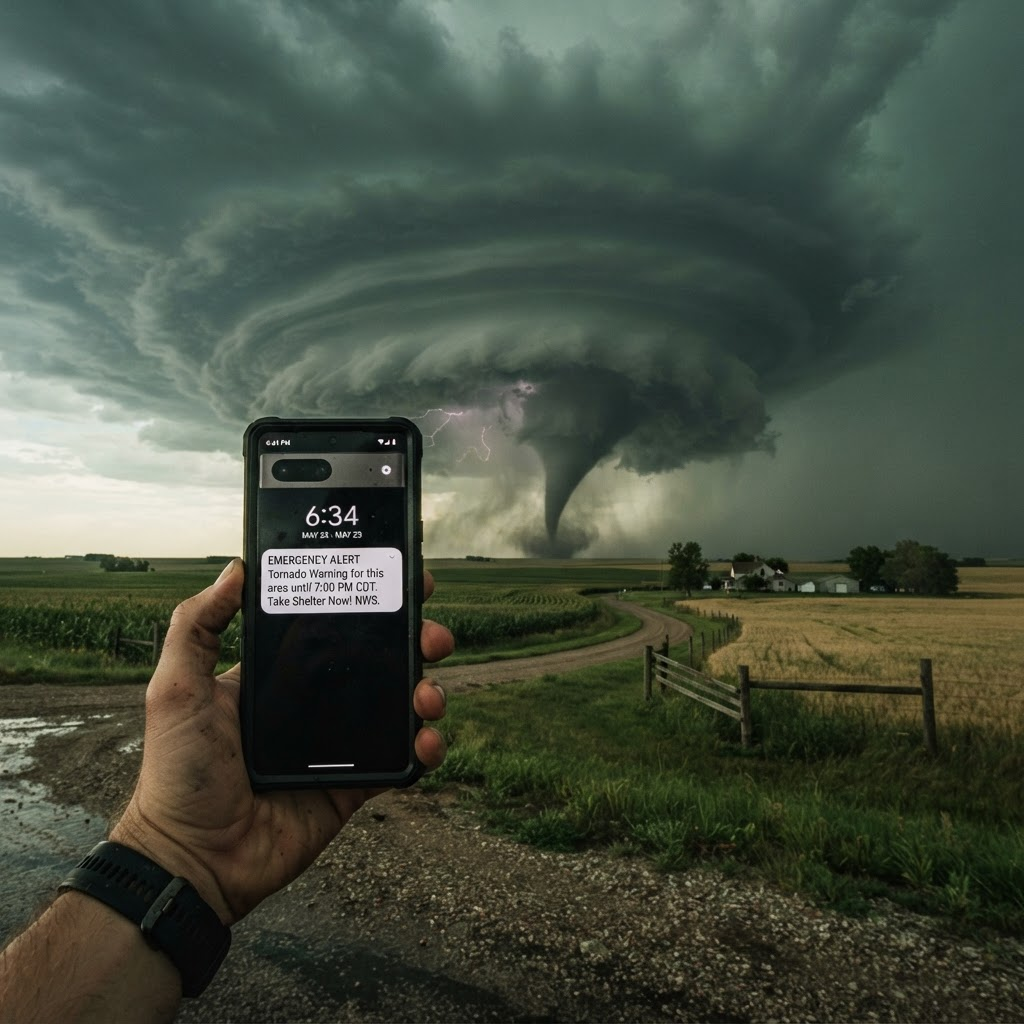
When severe weather moves into Kentucky, Indiana, or Illinois, your phone may suddenly light up with an alert: Tornado Watch or Tornado Warning.
Do you know the difference?
More importantly, does everyone in your family know what each alert means and what they should do next?
Understanding the difference between a tornado watch and a tornado warning can eliminate confusion when severe weather develops. Your family shouldn't be trying to make a plan after a warning has already been issued. Knowing where to go, what to bring, and how to reach your safest location should happen long before the sirens sound.
Here's what every household should know.
What Is a Tornado Watch?
A Tornado Watch means weather conditions are favorable for tornadoes to develop in or near the watch area.
Think of a watch as your signal to get prepared and pay attention.
A tornado may not be occurring at that moment, but conditions could produce one. Watches can cover large areas and may remain in effect for several hours.
What Should You Do During a Tornado Watch?
When a tornado watch is issued:
- Monitor trusted weather alerts and local forecasts.
- Keep your phone charged and emergency notifications enabled.
- Make sure everyone knows where the storm shelter or safe location is.
- Bring outdoor pets inside when appropriate.
- Locate shoes, medications, flashlights, and other essential supplies.
- Avoid unnecessary travel if severe storms are approaching.
- Be prepared to move to shelter quickly if conditions worsen.
If you have a storm shelter, this is a good time to make sure the entrance is accessible and nothing is blocking it.
A tornado watch means: Be prepared.
What Is a Tornado Warning?
A Tornado Warning is much more urgent.
According to the National Weather Service, a tornado warning means a tornado has been sighted or indicated by weather radar. When a warning is issued for your location, you should take protective action immediately.
This isn't the time to organize supplies, find shoes, move boxes away from the shelter entrance, or decide where everyone should go.
Those decisions should already be made.
A tornado warning means: Take action now.
What Should You Do During a Tornado Warning?
If a tornado warning includes your location, follow official instructions and move immediately to your designated safe location.
If your home has a storm shelter or safe room, go there promptly.
If a purpose-built storm shelter isn't available, National Weather Service guidance generally recommends moving to a basement or an interior room on the lowest floor of a sturdy building, away from windows.
Once sheltered:
- Continue monitoring reliable weather information.
- Protect your head and neck from potential debris.
- Keep children and pets close.
- Remain sheltered until the threat has passed or officials say it is safe.
Don't go outside to look for the tornado.
Tornadoes can be obscured by rain, darkness, buildings, or terrain. Waiting until you can physically see a tornado could cost valuable time.
Tornado Watch vs. Tornado Warning: An Easy Way to Remember
Here's the simplest distinction:
Conditions are favorable for tornadoes. Review your plan, monitor the weather, and be prepared to shelter.
A tornado has been detected or reported. If your location is affected, take protective action immediately.
Teaching children this simple distinction can also make your household's emergency plan easier to remember.
When Should You Go to Your Storm Shelter?
This is one of the most important questions families ask.
A tornado warning affecting your location is a clear signal to follow official guidance and move to your designated shelter immediately.
However, every situation is different.
If severe weather is approaching and someone in your household needs additional time to reach the shelter because of age, disability, or mobility limitations, your family's plan should account for that before storm season.
The goal isn't to see how long you can wait.
The goal is to make sure everyone can reach protection safely.
Does Your Family Have a Tornado Plan?
Buying a storm shelter is an important step, but preparedness doesn't stop after installation.
Every person in your household should know the plan.
Ask your family these questions:
- Where do we go during a tornado warning?
- How quickly can everyone get there?
- Who is responsible for younger children?
- Who helps older adults or family members with mobility needs?
- How will we handle pets?
- What emergency supplies are already inside or near our shelter?
- How will we receive weather alerts if the power goes out?
If your family can't answer these questions immediately, use your next calm-weather day to create and practice a plan.
What Should You Keep in a Storm Shelter?
Your emergency supplies should reflect your household's specific needs.
Consider keeping or having quick access to:
- Flashlights and extra batteries
- Battery-powered or hand-crank weather radio
- Portable phone chargers
- Closed-toe shoes
- Basic first-aid supplies
- Necessary medications
- Bottled water
- Copies of important information
- Supplies for babies or young children
- Pet leashes, carriers, and essential pet supplies
Periodically check your supplies and replace expired or outdated items.
Preparedness works best when it becomes part of your routine rather than something you think about only when severe weather is already approaching.
Why Tornado Preparedness Matters in Kentucky, Indiana, and Illinois
For families throughout Kentucky, Indiana, and Illinois, tornado preparedness shouldn't be limited to one particular month.
Severe thunderstorms and tornadoes can occur at different times of the year, which means households should maintain a plan even outside the traditional spring severe-weather season.
Fall is an excellent time to revisit that plan.
Check your weather-alert settings. Review your shelter location. Update your emergency supplies. Make sure new family members know what to do.
Most importantly, don't assume everyone remembers the plan.
Practice it.
Should You Have a Storm Shelter at Home?
For homeowners actively researching tornado protection, a residential storm shelter can provide a designated place for the household to go when severe weather threatens.
StormVault offers above-ground and below-ground storm shelter options for homeowners throughout Kentucky, Indiana, and Illinois.
The right configuration depends on factors including your property, available installation space, household size, accessibility needs, and personal preferences.
Whatever option you choose, accessibility matters. A storm shelter provides the greatest practical value when your household knows exactly where it is and can reach it quickly.
Frequently Asked Questions
What is the main difference between a tornado watch and tornado warning?
A tornado watch means conditions are favorable for tornadoes to develop. A tornado warning means a tornado has been detected by radar or reported and people in the affected area should take protective action immediately.
Should I go to my storm shelter during a tornado watch?
A tornado watch is your opportunity to prepare. Monitor weather information closely and make sure your shelter is accessible. Follow local official guidance and be ready to move quickly if a warning is issued or conditions become threatening.
Should I wait for tornado sirens before taking shelter?
No. Outdoor warning sirens are only one method of receiving emergency information and may not be heard indoors. Use multiple reliable alert methods, including Wireless Emergency Alerts, local weather information, and a NOAA Weather Radio where appropriate.
What if I don't have a storm shelter?
Follow National Weather Service guidance for your situation. In a sturdy building, this generally means moving to a basement or a small interior room on the lowest floor, away from windows. Your household should identify this location before severe weather occurs.
Can tornadoes happen in the fall?
Yes. Tornadoes can occur at any time of year when the necessary atmospheric conditions develop. That's why families in Kentucky, Indiana, and Illinois should maintain their severe-weather plans throughout the year.
Don't Wait for a Warning to Make Your Plan
A tornado watch is the time to prepare. A tornado warning is the time to act.
When a warning appears on your phone, your family shouldn't be asking, “Where should we go?”
Everyone should already know.
If your household doesn't currently have a dedicated storm shelter, now is the time to explore your options—not when severe weather is already in the forecast.
StormVault helps homeowners throughout Kentucky, Indiana, and Illinois find storm shelter solutions that fit their homes, families, and accessibility needs. Protect what matters most and prepare before the next storm. Contact StormVault today to explore your storm shelter options and request a quote.